Menu
When a loved one’s care needs change, families often mustmake big decisions in a short and emotionally fraught timeframe. It can be overwhelming to consider the best next steps for a senior loved one after a hospital stay or change in care need. Similarly, the path forward isn’t always clear when you recognize that it is no longer feasible or safe for your loved one to live alone. In these moments, it’s hard to know where to begin when considering short-term and long-term senior care options.
The team at Wesley Willows understands how difficult it can be to navigate this decision process. We’ve helped countless families determine the right care choices for their loved ones in our 60-plus years of serving the Rockford, IL, community.
We’ve put together this step-by-step guide to make the process less overwhelming for you. Follow the steps below to simplify the process and confidently make the best decision for your senior loved one.
If you have questions as you read or need further assistance, please contact our team, and we will be glad to help.
When your loved one needs extra care, you want to get them that care as quickly as possible. However, it’s important to avoid making decisions too quickly without honestly evaluating your loved one’s situation first. By taking a step back and determining what your loved one needs in daily life, you will set him or her up for ongoing health and wellness.
Start by identifying the root causes of your loved one’sneed for extra care.
You will likely be able to name obvious causes right away,such as a hospital stay for illness, surgery after an injury, or a sudden health decline. In these instances, short-term rehab is a fitting next step for moving toward recovery. However, there may be more than just the obvious causes tofactor into your decision.
Don’t just look at the most apparent reasons for your loved one needing additional care. Instead, think back to before the major injury or illness that began this decision process.
Ask yourself these questions:
If these questions raise concerns about your loved one’s ability to safely function at home, then you may want to look at long-term living options beyond the short-term care required for recovery.
After all, the goal of short-term care is to get a person back to how they were functioning before the injury or illness. So, if theywere having difficulty living independently before the need for short-term care arose, then long-term living could be the best option for their continued health and safety.
Short-term rehab is the best option for seniors who need constant skilled nursing supervision to recover from an illness, injury, or sudden health decline. Physicians will often recommend short-term rehab as away of transitioning between a hospital stay and returning home or moving to a long-term living community.
Therefore, it is a good idea to consult your loved one’s doctor before hospital discharge to see what type of short-term rehab they recommend. The doctor will likely refer you to a short-term option that offers the type of care your loved one needs. Common venues for short-term rehab include hospitals, skilled nursing facilities, rehab centers, or in-home care.
When considering short-term options, it’s important to know about Medicare coverage. Medicare will cover your loved one’s stay in a Medicare-certified skilled nursing facility for up to 100 days if they have had a qualifying inpatient hospital stay of at least three days in a row and meet several other conditions.
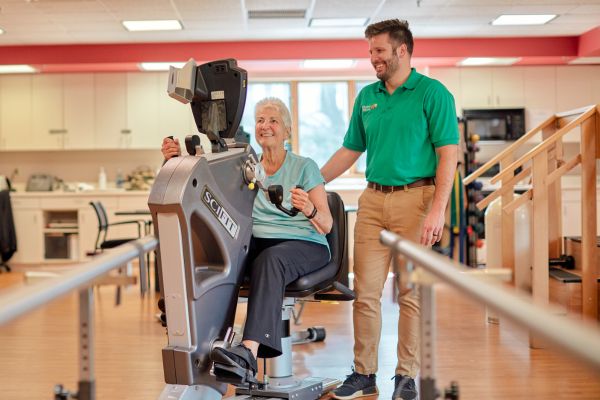
If you suspect your loved one will need long-term living after short-term rehab, it’s a good idea to look for a skilled nursing facility that is part of a Continuing Care Retirement Community (CCRC).
CCRCs offer residents a full continuum of senior living options, including independent living, assistedliving, skilled nursing, and memory care. Residents can easily transfer from one level of care to another when necessary, and some communities, like Wesley Willows, offer a lifetime guarantee of care, meaning residents will still receive care even if they outlive their financial resources.
It is important to note that Medicare does not cover the long-term living options like independent and assisted living at a CCRC. Therefore, a move from short-term rehab to long-term living will require financial planning to ensure living at the community is financially viable for your lovedone.
When looking for a senior community for short-term and/or long-term living, there are several factors to consider, including the qualityof the staff, the feel of the environment, and the programs, services, and amenities provided for daily life.
The quality of the staff is especially important if your loved one needs short-term rehab because the staff will be monitoring him or her 24/7.
A good indicator of quality is if the skilled nursing facility is Medicare-certified. This certification indicates that the facility has been inspected by the federal government and found to provide a safe and acceptable quality of care.
Beyond Medicare-certification, you also want to make sure the facility offers the type of health care professionals your loved one needs for recovery. For example, the Medicare-certified skilled nursing facility at Wesley Willows offers a wide variety of specialized professionals to tailor care to each resident’s needs, including:
You will also want to look for professional staff providing high-quality, friendly, and personalized care in a long-term living community. Are the well-being coordinators friendly, and do they go above and beyond to cater to each resident’s needs? Do residents receive the assistance they need in a timely manner? Look for these indicators of quality as you tour the communities you are considering for your loved one.
Contrary to popular belief, short-term and long-term living communities do not have to feel like hospitals. The best communities take care to make their facilities feel like home for the residents. Tasteful, modern décor, softlighting, and comfortable furniture go a long way in putting residents at ease during what can be a difficult time of transition. Residents should also have the freedom to personalize their rooms to make them feel as much like home as possible.
So, don’t settle for a skilled nursing facility or assisted living community that feels more like an institution. Look for an community that cultivates beautiful spaces where residents can celebrate life.

You also want to consider how your loved one will spend his or her time during a short-term or long-term stay. Look for a community that features a robust selection of programs, services, and amenities to promote resident well-being.
Here are some examples of the programs, services, and amenities residents enjoy here at Wesley Willows:
Find a community where your loved one can stay engaged and social with plenty of opportunities for enjoying life every day.
The process of researching short-term and long-term living communities inevitably raises questions and concerns. Fortunately, you and your loved ones don’t have to face it alone.
At Wesley Willows, we have friendly Senior Living Sales Coordinators whose job is to walk with families through this daunting and emotional process. Their goal is to help you and your loved one understand what living options are available, how care works, and what next steps look like. They will answer all your questions and give you all the information you need to make an informed decision about your loved one’s future.
Since Wesley Willows is a not-for-profit senior living community, you don’t have to worry about tricky or underhanded sales tactics. Our reward is not your money; rather, it is seeing your loved one thrive in a community that meets all his or her needs—even if that community turns out to be somewhere other than Wesley Willows.
Don’t walk through this often-overwhelming process alone. Instead, let our team walk with you to provide clarity and confidence along the way.
We hope this guide has given you a helpful roadmap to use as you navigate the short-term care and long-term living research process. Short-term skilled nursing care is an excellent option for recovering from an injury or illness, especially at a Medicare-certified facility. You will also want to consider long-term living in a CCRC if a return home is no longer a viable option for your loved one.
Please consider Wesley Willows for your loved one’s short-term or long-term living needs. Our nationally ranked CCRC offers Medicare-certified skilled nursing care for short-term or long-term stays. Residents also enjoy life in our beautiful, active, and amenity-rich independent and assisted living communities in Rockford, IL.
Please contact us today to schedule a no obligation consultation with one of our Senior Living Sales Coordinators. We would be thrilled to answer your questions and show you around campus.